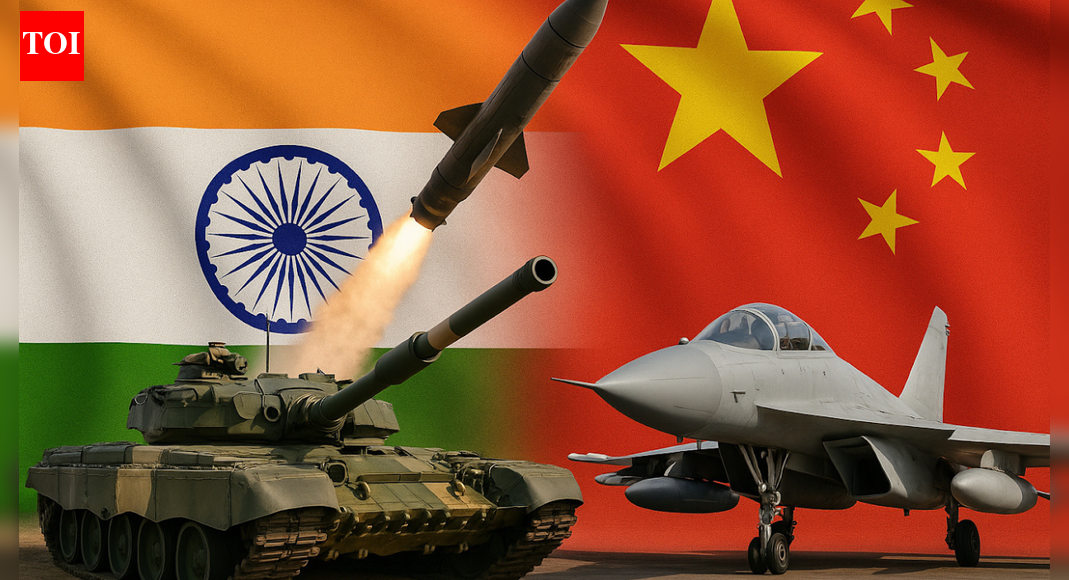
Asia's Arms Race: India Rises, China Stumbles
A new report from the Stockholm International Peace Research Institute (SIPRI) reveals a shifting landscape in Asia's arms industry. While global arms revenues surged, Asia saw a decline, primarily due to setbacks in China. India, however, experienced steady growth.
Global Arms Revenue Soars
In 2024, global arms revenues reached a record high of $679 billion, a 5.9% increase in real terms. This surge was largely driven by Europe and the United States.
India's Steady Climb
Despite not being a global arms giant, India's arms industry saw a notable 8.2% increase in combined revenues across its top three companies. This growth is attributed to the "Atmanirbhar Bharat" (self-reliant India) campaign, which promotes domestic defense production.
- Hindustan Aeronautics Ltd (HAL): $3.81 billion in revenue.
- Bharat Electronics Ltd (BEL): $2.47 billion in revenue, a 24% jump due to domestic orders for radar systems and electronic warfare equipment.
- Mazagon Dock Shipbuilders: $1.23 billion in revenue, boosted by submarine and destroyer production.
China's Disrupted Progress
In contrast to India, China's arms revenues fell by 10%. This decline is linked to high-profile corruption scandals and contract delays within Beijing's defense establishment.
- NORINCO: Revenue plunged 31% due to corruption and leadership changes.
- CASC: Revenue dropped 16% following delays in military satellite programs and leadership changes.
- AVIC: Revenue slipped 1.3% due to aircraft delivery delays.
Nan Tian, director of the SIPRI military expenditure and arms production programme, noted that corruption allegations led to major arms contracts being postponed or cancelled in China.
Other Key Players in Asia
While China's decline impacted the region's overall performance, other Asian powers saw significant growth:
- South Korea: Arms producers rose 31% to $14.1 billion, driven by strong exports.
- Japan: Arms revenues increased by 40% to $13.3 billion, reflecting increased defense spending.
Global Context: US and Europe Lead, Middle East Expands
US firms continue to dominate the global arms industry, with 39 companies generating $334 billion in revenue. However, programs like the F-35 are facing delays and cost overruns.
European producers saw a 13% increase, reaching $151 billion, as countries rearm in response to the war in Ukraine.
The Middle East is also expanding its presence in the arms industry, with nine companies in the Top 100 and combined revenues of $31 billion.
Looking Ahead
For India: Continued focus on domestic procurement and potential export expansion, particularly to Africa and Southeast Asia.
For China: Recovery will depend on restoring procurement integrity, managing talent loss, and containing political fallout.
For Asia: The regional arms race continues, with success depending on supply chain resilience, governance, and geopolitical alignment.